Lost Your Passport While Travelling? What to Do Next

Kevin Hall
Mar 27th, 2026
·8min read
Mar 27th, 2026
·8min read
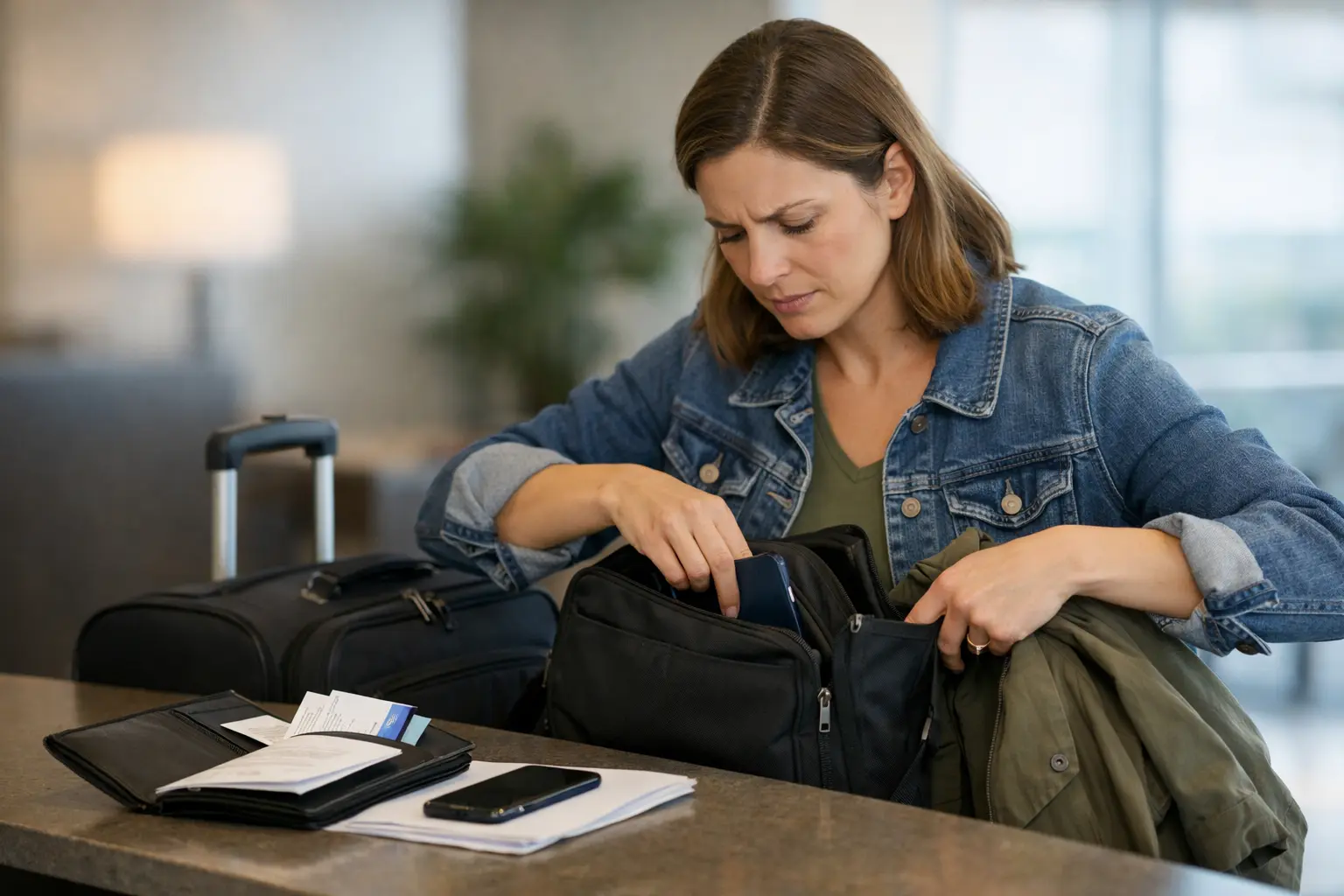
Losing your passport while travelling is different from losing almost any other item. It is not just an inconvenience. It can affect your identity documents, your ability to board transport, your hotel check-in, visa plans, and the timing of your entire trip.
The right response is a fast, structured one. You need to work out whether the passport is genuinely lost, check the places where it is most likely to be handed in, and prepare for official replacement steps without wasting time.
This guide explains what to do next, especially if you are away from home and may need to travel again soon.
Do not spend hours in denial, but do spend 10 to 15 minutes checking the highest-probability places properly.
Check:
Think backwards from the last time you definitely used it.
The most useful clues are usually:
This quick search matters because in many systems, once you formally report a passport lost or stolen, it may be cancelled and no longer usable even if someone finds it later.
Passports are often found quickly when they are left in predictable travel locations.
Start with:
When you contact them, keep it short and useful.
Share:
Avoid posting photos of the passport identity page or sharing your full passport number publicly.
This is the key decision point.
If you are supposed to:
you should move quickly from searching to official help.
The general rule is:
Do not assume a photocopy or phone photo of your passport will be enough to travel. It may help with identification, but it is not a substitute for a valid travel document.
If the passport is genuinely missing and travel is time-sensitive, this is the most important official step.
Ask:
Be ready for the process to vary by country. Some authorities can issue emergency travel papers for urgent return travel, while others may require a fuller replacement application.
Useful details to gather before the call or appointment:
If you have a photo or scan of the passport stored securely, it can make the replacement process easier. If you do not, that is not unusual, but you should be ready to answer more identity questions.
A lost passport and a stolen passport can trigger slightly different follow-up steps.
If you believe it was stolen, or your bag was taken, consider reporting the theft to:
A police report is not always required for a replacement document, but it may still help with insurance claims, theft documentation, or proving the timeline of what happened.
If the passport was inside a stolen bag, treat the rest of the contents as part of the same incident. If your wallet or phone also went missing, work through the security steps in What to Do If You Lost Your Wallet: A Step-by-Step Recovery Guide and Lost Your Phone? Exact Steps to Take Before Someone Else Finds It.
Do not wait until you reach the embassy desk to start assembling your evidence.
You may be asked for some combination of:
Requirements differ by issuing country and location, so treat the official checklist from your embassy or passport authority as the one that matters.
Official passport replacement is one track. Physical recovery is another.
If the passport was probably misplaced rather than stolen, file or submit a focused lost-item report with the places most likely to receive it.
Useful examples include:
A good report should include:
If you need help writing that description clearly, use the approach in How to File a Lost Item Report That Actually Helps People Find Your Stuff.
Losing a passport often exposes more than one problem at once.
Check whether you also lost:
Then decide what else needs to be locked, replaced, or updated.
If your passport was kept inside a bag with other sensitive documents, do not treat it as a single-document issue.
Once you know the likely timeline for replacement or emergency travel papers, update the bookings that depend on it.
That may include:
Handle the most time-sensitive booking first. A calm hour spent rearranging the next part of your itinerary is usually better than waiting until you are refused boarding or miss a check-in deadline.
Use something like this:
“Hi, I think I may have left my passport at your property today between 8:30 and 9:15 am. I last remember using it at check-in and it may have been inside a dark document holder. If anything has been handed in, please let me know. I can confirm identifying details privately.”
What if I find the passport after reporting it lost?
Do not assume it is still valid. In many cases, a passport reported lost or stolen is cancelled. Check with the issuing authority before trying to use it again.
Do I always need a police report?
Not always. It is more likely to help if the passport was stolen, if an insurer wants documentation, or if local authorities specifically advise it.
Can I travel with a photocopy or phone photo of my passport?
Usually not as a substitute for the real document. A copy can help prove identity or speed up replacement, but it is not the same as a valid passport.
Should I keep checking lost property after starting the official replacement process?
Yes, but do it realistically. Continue checking the most likely hand-in points while following the embassy or passport-office instructions.
What is the most useful detail to have if my passport is missing?
Your passport number is very helpful if you have it, but a clear timeline, travel itinerary, and another form of ID are also valuable.
If your passport is missing while travelling, do these in order:
Losing a passport is stressful, but the process becomes much easier once you split it into two tracks: official replacement and practical recovery. Move quickly, keep your details organised, and use the most likely local hand-in points before the trail goes cold.
Need help documenting where and when it went missing? Start a lost-item report while the details are still fresh.
Whether you've lost a cherished item or found something that belongs to someone else, posting an ad on lostandfound.io can help reunite items with their owners. It's free and easy to do.
Post a FREE ad